98%
of words on a page you need to know before reading feels comfortable without a dictionary
Vocabulary research (Paul Nation, 2006)
Choose MeloLingua if you want guided story immersion with output practice. Stay with LingQ if importing and managing your own library is the main attraction.
LingQ is powerful when you enjoy importing texts and tracking known words. MeloLingua is for learners who want curated story sessions with listening and speaking checkpoints already built in.
Written by our language team· Updated · How we write comparisons
Source and disclosure: MeloLingua publishes this comparison and appears in it. Product facts are checked against official sources; recommendations are editorial judgments about how each app fits a learning routine, not controlled evidence that one app produces better outcomes.
By the numbers
Reading and listening inside a story — with help when you need it — helps many people remember words better than flashcards alone.
98%
of words on a page you need to know before reading feels comfortable without a dictionary
Vocabulary research (Paul Nation, 2006)
95%
known-word coverage is a practical minimum for supported reading, but still leaves frequent unknown words
Vocabulary research (Paul Nation, 2006)
A1–B2
the current level range used for MeloLingua story sessions and public graded readers
MeloLingua product fact · verified August 13, 2026
Side by side
This table compares how you actually practice — not brand hype. We say where LingQ still wins; see the verdict cards below.
MeloLingua vs LingQ — side-by-side comparison
| Topic | MeloLingua | LingQ |
|---|---|---|
| What you do each day | Curated story arcs with checkpoints | Import-heavy reading plus vocabulary tracking |
| Getting started | Low: open a session and continue | Medium: source, import, sort, and manage texts |
| Listening practice | Native narration synced to story practice | Depends on learner-selected material |
| Speaking practice | Listen and repeat aloud on story lines | Mostly texts and word lists you build yourself |
| Best fit | Learners who want guided immersion sessions | Readers who enjoy managing large libraries |
Reader-first vs session-first
MeloLingua narrows the surface area so your energy goes into comprehension, sound, and speech rather than file management.
1
The story difficulty is part of the product, not a guess from an imported page.
2
Vocabulary help stays inside the arc you are finishing.
3
Narration follows the session instead of depending on external media.
4
Speaking reps make the day feel finished.
Original angle
Reading your own texts is flexible, but serious learners often need a narrower path that makes completion easier.
Friction
A guided story session means less prep — open, read, listen, and speak without hunting for texts first.
Alignment
You do not need to hunt for transcripts, timestamps, or equivalent recordings.
Closure
The loop finishes when you understand and speak selected lines from the story.
What LingQ is
LingQ is a reading platform where learners import web pages, podcasts, and ebooks, tap words for translations, and track known-word counts. You build your own library from the content you find — it's not packaged as a single daily session.
Real situations
These are realistic learner situations — not every switch means canceling your current app.
Collecting texts is not the same as finishing a session. MeloLingua skips the setup: open a graded story, read with glosses, listen to matched narration, speak before you close the tab. One session, one story, one clear finish line.
How MeloLingua sessions work →MeloLingua ships text and narration together — no hunting for timestamps or equivalent recordings. That alignment matters for noticing word boundaries and stress patterns while reading.
Story language app overview →Use LingQ for articles you choose on personal topics. Use MeloLingua three or four days per week for story output practice. Pairing import freedom with session structure is a common combination among intermediate learners.
Spanish texts to read →Research note: You learn words faster when you see them again in context — often 30–40% better recall than isolated lists. LingQ gives you huge reading breadth; MeloLingua focuses on finishable sessions where the same lines become reading, listening, and speech.
Who should pick what
LingQ: Importing your own texts makes sense when your personal library is the center of learning.
MeloLingua: The story, audio, vocabulary, and speaking rep are packaged before you arrive.
MeloLingua: Pronunciation checkpoints are part of the session, not an extra habit to remember.
Related guides
If LingQ is close but not quite right, these guides cover the next apps people usually try.
Try MeloLingua
Open a graded passage, hear the story narration, and move from reading to speaking on real A1–B2 content. These are current product screens, not concept artwork.
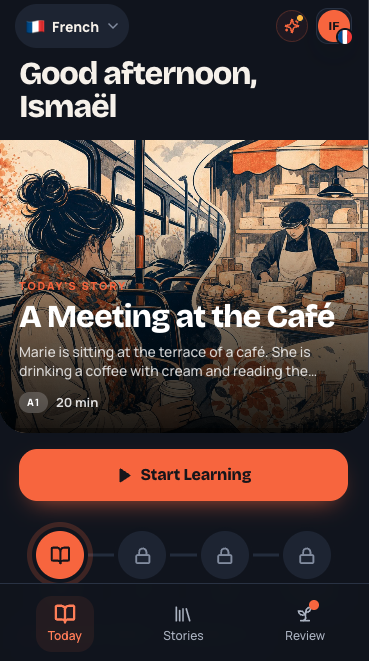
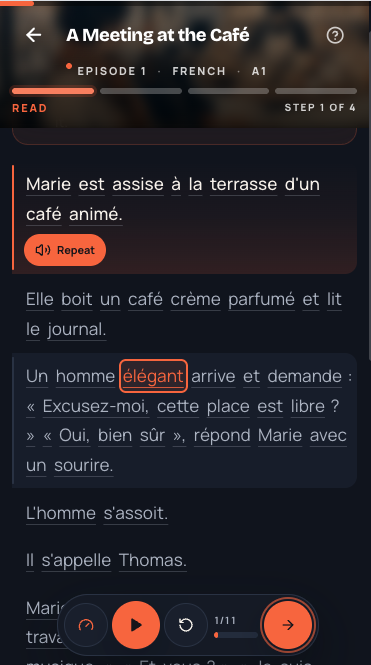
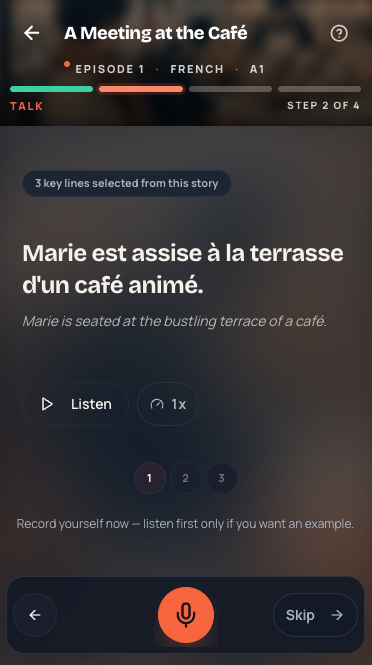
Graded passages without import setup — open and read.
Free A1–B2 library with audio, translation, and printable comprehension worksheets.
Line-by-line glosses on curated Spanish content.
Curated sessions when library upkeep is not the goal.
Learn the method
Our comparisons draw on published research about reading in context, learning words through stories, and building a daily habit — with sources linked below.
Answers
MeloLingua is best if you want story-based input with the audio and speaking work already packaged. LingQ remains a better fit when importing your own authentic texts is how you mainly learn.
LingQ focuses on importing, reading, and tracking words. MeloLingua focuses on guided story sessions that combine reading, listening, vocabulary, and speaking.
Yes. MeloLingua keeps vocabulary support attached to the current story so learners can resolve meaning quickly without leaving the session.
MeloLingua is built for that use case because pronunciation drills follow the same story lines learners just read and heard.
Yes. Use LingQ for open-ended reading and MeloLingua for structured story sessions with listening and speaking checkpoints.
MeloLingua is built for learners who want daily exposure to compound into comprehension, vocabulary recall, and clearer spoken sentences.
Review these words right before you would forget them