98%
of words on a page you need to know before reading feels comfortable without a dictionary
Vocabulary research (Paul Nation, 2006)
Choose MeloLingua if you want story practice inside one repeatable app session. Choose StoryLearning if you want a named course curriculum and workbook-style progression.
StoryLearning popularized story-led courses. MeloLingua keeps the narrative method but packages it into shorter daily sessions with listening, vocabulary support, and speaking reps in one mobile loop.
Written by our language team· Updated · How we write comparisons
Source and disclosure: MeloLingua publishes this comparison and appears in it. Product facts are checked against official sources; recommendations are editorial judgments about how each app fits a learning routine, not controlled evidence that one app produces better outcomes.
By the numbers
Reading and listening inside a story — with help when you need it — helps many people remember words better than flashcards alone.
98%
of words on a page you need to know before reading feels comfortable without a dictionary
Vocabulary research (Paul Nation, 2006)
95%
known-word coverage is a practical minimum for supported reading, but still leaves frequent unknown words
Vocabulary research (Paul Nation, 2006)
A1–B2
the current level range used for MeloLingua story sessions and public graded readers
MeloLingua product fact · verified August 13, 2026
Side by side
This table compares how you actually practice — not brand hype. We say where StoryLearning still wins; see the verdict cards below.
MeloLingua vs StoryLearning — side-by-side comparison
| Topic | MeloLingua | StoryLearning |
|---|---|---|
| Format | Daily app sessions with graded story arcs | Purchased story courses per program |
| Listening | Narration tied to story practice | Varies by course materials |
| Speaking | Guided repetition after story checkpoints | Mostly self-directed output |
| Portability | Mobile-first repeatable loop | Often course, book, or audio course bundles |
| Best fit | Busy learners who want one daily loop | Learners who love named curricula |
Method to routine
The story method works best when learners meet it often. MeloLingua makes the daily unit smaller and easier to finish.
1
Start with a story segment that fits a daily session.
2
Resolve vocabulary while staying inside the narrative.
3
Use narration to connect spelling, rhythm, and meaning.
4
Turn the story into output before moving on.
Original angle
MeloLingua focuses on session design: small enough to finish, rich enough to matter.
Cadence
A learner can collect story exposure without waiting for a long study block.
Integration
Reading, listening, vocabulary, and speaking reinforce the same material.
Momentum
Story continuity gives learners a reason to come back.
What StoryLearning is
StoryLearning (Olly Richards) sells story-led language courses — books, audio, and structured programs per language — built around the idea that narratives beat textbooks. You purchase a complete course with structured content, not a single daily app session with built-in speaking checkpoints.
Real situations
These are realistic learner situations — not every switch means canceling your current app.
Courses teach deeply; apps enforce cadence. MeloLingua compresses story input, audio, glosses, and speaking into one repeatable session — useful between longer course chapters to keep exposure compounding.
Daily story app sessions →Try MeloLingua marketing-site passages before committing to another bundle — A1–B2 texts with tap-to-translate and audio, no signup required on the web demos.
Spanish texts to read free →Classroom reading studies link sustained story input to faster gains than drill-only instruction (summarized in our 2026 statistics post). MeloLingua adds narrator-led listening and repeat-aloud practice on the same lines you read.
Story learning statistics →Research note: Story courses and daily app sessions answer different needs. StoryLearning goes deep on curriculum; MeloLingua focuses on short, finishable sessions with audio and speaking built in. What matters most is consistent reading and listening at a level you mostly understand — which graded mobile stories make easier to repeat every day.
Who should pick what
StoryLearning: A named curriculum is useful when you want a single long-form path.
MeloLingua: MeloLingua compresses story input, audio, vocabulary, and speaking into a repeatable loop.
MeloLingua: Speaking checkpoints are part of the story session rather than separate self-study.
Related guides
If StoryLearning is close but not quite right, these guides cover the next apps people usually try.
Try MeloLingua
Open a graded passage, hear the story narration, and move from reading to speaking on real A1–B2 content. These are current product screens, not concept artwork.
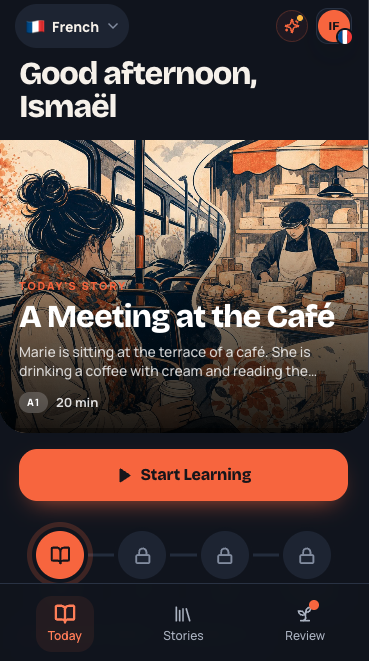
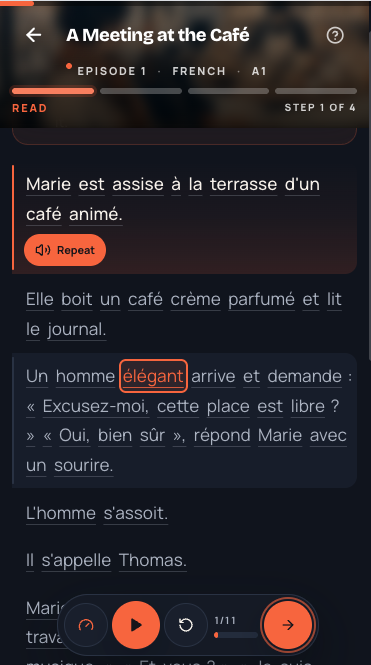
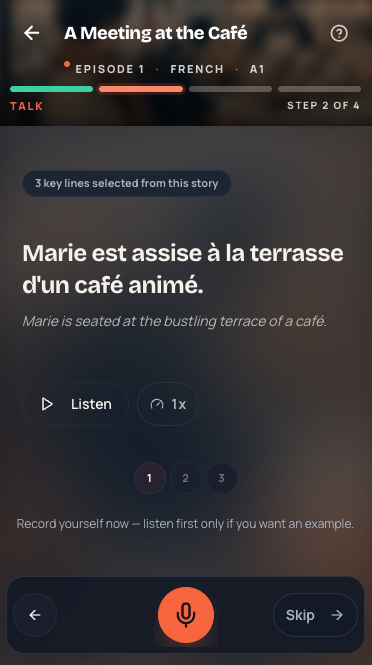
Daily arcs instead of separate course purchases.
Short sessions with narration and speaking built in.
A1–A2 entry point for story-method learners.
The repeatable daily loop StoryLearning fans often want.
Learn the method
Our comparisons draw on published research about reading in context, learning words through stories, and building a daily habit — with sources linked below.
Answers
MeloLingua fits learners who want short daily sessions with stories, narration, vocabulary support, and speaking practice in one app.
StoryLearning centers course programs. MeloLingua centers a repeatable story session with comprehension, listening, and speaking checkpoints.
It can complement them. MeloLingua gives learners graded narratives plus interactive support and speaking practice inside the app.
MeloLingua supports speaking by replaying narrated story lines and prompting learners to repeat sentences with guidance.
Yes. Beginners can start with simple stories, use translation support when blocked, and let the session structure keep practice manageable.
MeloLingua is built for learners who want daily exposure to compound into comprehension, vocabulary recall, and clearer spoken sentences.
Review these words right before you would forget them